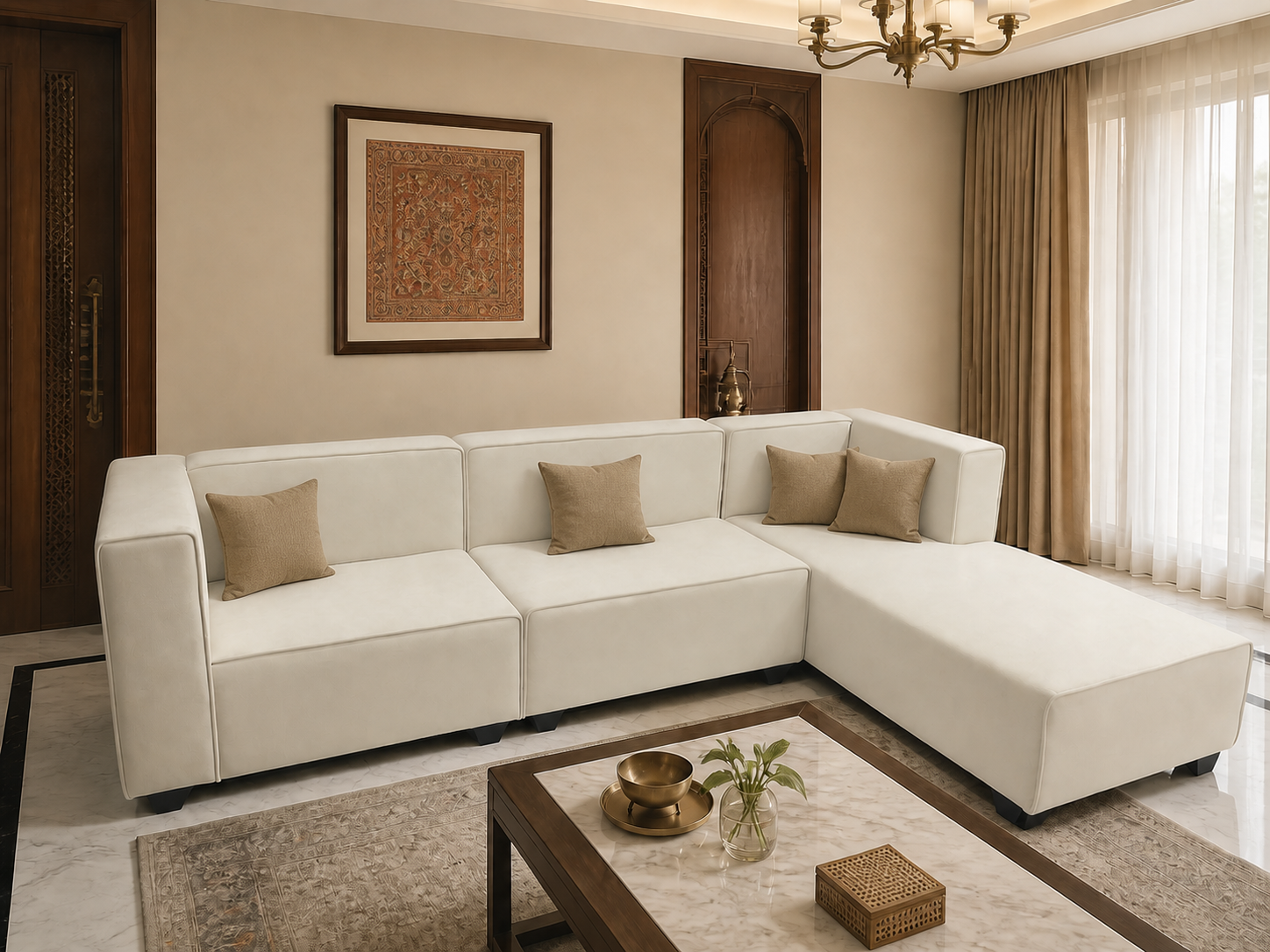

An L-shape sofa can make a Kolkata living room feel more organised, not more crowded—provided the proportions and chaise direction are decided from the room rather than from a showroom photograph. At Avikar, the first conversation is therefore about layout: wall lengths, doors, windows, the television position and the route people use to move between the living and dining areas.
The appeal is easy to understand. An L-shaped arrangement uses a corner, creates generous family seating and can define the living zone in an open-plan flat. The mistake is buying by seat count alone. Two sofas both described as “five-seaters” can occupy very different amounts of floor space because arm width, seat depth and chaise length vary.
Measure the room before measuring the sofa
Start with the complete living area, then mark every fixed interruption: door swings, balcony access, windows, plug points and built-in storage. Measure the wall where the long side will sit and the distance available for the projecting chaise. Do not treat those as two independent measurements; the full L must work as one footprint.
Use masking tape or newspaper to mark the proposed outline on the floor. Live with that outline for a day. Walk from the entrance to the balcony, pull out the dining chairs and open nearby cabinets. If the taped footprint makes you turn sideways or creates a bottleneck, the finished sofa will do the same.
Choose the chaise direction from your traffic flow
“Left-facing” and “right-facing” descriptions can be confusing because sellers do not always describe orientation from the same viewpoint. The safer method is to stand in the room facing the sofa position and decide exactly where the chaise should extend.
In many Kolkata flats, the best chaise direction is the one that keeps the main route from the entrance to the dining area or balcony open. The chaise can also act as a gentle divider between living and dining zones, but it should not become a barrier that everyone must walk around.
Check depth, arms and visual weight
Overall depth matters as much as length. Deep seats are comfortable for lounging, but they also push the coffee table further into the room. Broad padded arms consume floor area without adding a seat. In a compact room, a slimmer arm, raised legs and a cleaner back profile can make the same seating capacity feel much lighter.
Comfort should still lead the decision. At Avikar, sofas are planned around the home as well as the person using them. Our sofa consultation covers layout and proportions, followed by fabric and comfort selection, so the finished piece fits both the room and daily life.
Leave space for the rest of the room
A sofa is only one part of a working layout. Allow comfortable space between the seat and coffee table, enough room to pass on the open side, and a clear sightline to the television. Remember the smaller details too: side tables, floor lamps, curtains and the reach of a balcony door can all change how a sofa footprint works.
Also measure the delivery route before ordering. Note the main door, lift, staircase turns and corridor width. A sofa that fits the living room but cannot reach it is not the right sofa. Modular construction can be useful where access is tight, but the section sizes still need to be checked.
L-shape sofa or separate seating?
An L-shape works particularly well when the television position is fixed, the family prefers to sit together and one corner can be used efficiently. Separate sofas and accent chairs may be better when you rearrange frequently, entertain in conversation groups or need a completely open route through the room.
For a compact home that also needs occasional sleeping space, compare the layout with a sofa-cum-bed for a small Kolkata flat. The best answer is not a furniture category; it is the configuration that solves the room’s real job.
A practical checklist before you order
- Record the full room dimensions and both arms of the proposed L.
- Mark door swings, balcony access, windows and circulation routes.
- Confirm chaise direction while standing in the actual room.
- Check total depth, arm width and back height—not just seating capacity.
- Plan space for the coffee table, curtains, side tables and dining chairs.
- Measure the lift, staircase, corridor and main doorway.
- Choose upholstery and comfort after the footprint is settled.
Frequently Asked Questions
Can an L-shape sofa work in a small Kolkata living room?
Yes, when the sofa is scaled to the room and the chaise does not block the main walkway. A compact frame with slimmer arms can often provide useful seating without the visual bulk of two separate sofas.
Should the chaise be on the left or right?
Choose the side that preserves access to doors, the balcony and the dining area. Confirm the direction in the room rather than relying only on “left-facing” or “right-facing” labels.
What should I measure before visiting a sofa showroom?
Bring wall lengths, room width, door and window positions, the television location and delivery-access measurements. Room photographs or a simple floor-plan sketch are also helpful.
Can Avikar customise a sofa for my room?
Avikar’s sofa service is built around layout, proportions, fabric and comfort selection. Visit the showroom with your measurements so the team can recommend a configuration suited to your space.
Plan your sofa with Avikar
Bring your living-room measurements and photographs to Avikar Furniture & Furnishings at 46 Central Avenue, Bowbazar, Kolkata, West Bengal 700012. We will help you compare proportions, chaise direction, fabric and comfort before you commit. Call or WhatsApp 8080095551 to arrange a consultation. Trusted in Kolkata since 1971.