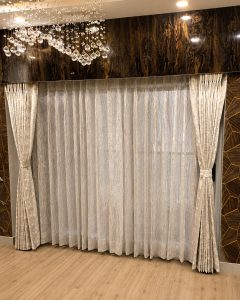
Ask any curtain consultant in this city what customers are searching for more this year, and blackout fabric comes up before almost anything else. It’s not a trend we chased — it’s a request we started hearing more often at our own showroom on Central Avenue, and the pattern makes sense once you think about what a Kolkata bedroom actually deals with: harsh afternoon glare bouncing off neighbouring buildings, streetlights that don’t switch off, and a monsoon sky that somehow still lets in enough brightness to wake a light sleeper at 5 a.m.
This guide covers what blackout curtains actually do, where they’re worth the investment, and how to choose fabric that performs well in Kolkata’s heat and humidity rather than just looking good on a showroom rail.
Why Blackout Matters More Here Than the Reviews Suggest
Most blackout curtain content online is written for climates with long winters and mild summers. Kolkata’s problem is different. For eight months of the year, the issue isn’t cold — it’s heat gain through glass and the sheer intensity of tropical daylight, which is stronger and more direct than what a lot of imported fabric specifications are tested against. A true blackout lining does two jobs at once here: it blocks light, and it slows down radiant heat coming through the window, which matters when a bedroom faces west or gets full afternoon sun.
The second driver is noise and light pollution from busy roads — increasingly common in the apartment blocks going up across South and Central Kolkata, where a bedroom window can face a main road, a neighbour’s balcony lighting, or a streetlamp at close range.
Blackout vs Dim-Out: They’re Not the Same Fabric
This is the most common confusion we clear up during a consultation. Dim-out fabric has a tight weave that cuts down glare and softens light without fully removing it — it still lets in a gentle glow, which suits living rooms and dining spaces where you want privacy and comfort without a cave-like effect. Blackout fabric is built differently: a dense face fabric backed with a separate opaque or foam lining, engineered to block light almost completely. It’s the right choice for bedrooms, home theatre or media rooms, nurseries, and any room where even a sliver of morning light is a problem.
The mistake we see most often is customers assuming “heavy fabric” automatically means blackout. Weight alone doesn’t block light — the lining does. A heavy but unlined fabric can still let in a surprising amount of glow at the seams and along the top of the track.
What to Look For in Blackout Fabric
A few things separate a good blackout curtain from one that disappoints after a year of Kolkata humidity:
The lining, not just the face fabric. Ask specifically whether the blackout performance comes from a bonded lining or a separate detachable lining. A separate lining is easier to replace if it degrades and gives you flexibility to reuse the face fabric later.
Full-width coverage and generous fullness. Blackout curtains work best with double fullness and a track or rod that extends well past the window frame on both sides — gaps at the edges are the single biggest reason a “blackout” curtain still leaks light.
Humidity-appropriate fabric. Not every blackout-backed fabric handles Kolkata’s monsoon humidity equally well. Our consultants steer customers toward face fabrics that resist mildew and don’t stiffen or discolour with repeated humidity cycles, since that’s a more realistic failure point here than it would be in a drier climate.
Pairing Blackout Curtains With Blinds
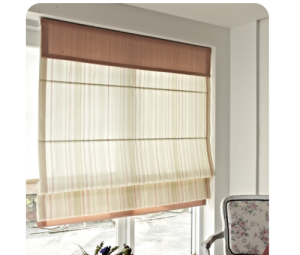
For rooms with harsh western or southern exposure, we often recommend layering: a roller or Roman blind mounted close to the glass for daytime light control, with blackout curtains outside for full darkness at night and a finished, layered look. It’s the same principle we use across our window blinds guide — blinds handle daily adjustment, curtains handle the extremes.
If you’re still deciding between fabric options generally — not just blackout — our curtain buying guide covering fabric, fit and style is a useful starting point before narrowing down to blackout specifically.
How Avikar Makes and Fits Blackout Curtains
We’ve been fitting curtains for Kolkata homes since 1971, and blackout requests go through the same process as any other order: a consultant talks through which rooms actually need full blackout versus dim-out, you browse blackout-backed options and separate lining choices from our in-store range, our technician takes precise in-home measurements, and the curtains are stitched in our own workshop before our fitters install the track and hang them. Nothing is outsourced, which is what lets us stand behind the fit and the light-blocking result.
Frequently Asked Questions
Do I need blackout curtains in every room, or just the bedroom?
Most homes only need true blackout in the bedroom and, if you have one, a media or home theatre room. Living rooms and dining spaces usually do better with dim-out fabric, which cuts glare without making the room feel closed off during the day.
Can I add blackout lining to a fabric I already like, or do I have to pick from blackout-specific fabric?
Both options exist. We stock fabrics with blackout backing built in, and we can also add a separate blackout lining behind most face fabrics you choose — so you’re not limited to a small blackout-only range if you’ve already fallen in love with a print or texture.
Will blackout curtains make my room hotter by blocking airflow?
No — a blackout curtain affects light and radiant heat through the glass, not room ventilation. If anything, blocking direct afternoon sun through a window reduces how much heat builds up in the room during the day.
How long does it take to get blackout curtains made and fitted?
The process is the same as our standard custom curtains: in-home measurement, stitching in our own workshop, then fitting. Timing depends on fabric availability and order size, and our consultant will confirm an exact schedule once you’ve chosen fabric.
Do blackout curtains help with noise as well as light?
The denser fabric and lining do add a modest amount of sound dampening compared to a light, unlined curtain, though they’re not a substitute for acoustic treatment if noise is your primary concern.
Visit or Book a Free Consultation
See blackout and dim-out fabric side by side, in person, before you decide. Visit the Avikar showroom at 46 Central Avenue, Kolkata – 700012, Monday–Saturday, 10:30 AM–7:00 PM, Sunday Closed, or message us on WhatsApp at 8080095551 and we’ll bring samples to you.