
Most people choose upholstery fabric the way they choose a shirt, by colour and from across the room. Two monsoons later the arms have gone shiny, the seat cushions smell faintly of damp, and the sofa that looked perfect under showroom lighting looks tired in the flat. We have been selling furnishing fabric on Central Avenue since 1971, and the fabric that lasts in a Kolkata home is very rarely the one that photographs best.
This is a practical guide to choosing upholstery fabric here, in this climate, for the way Kolkata homes are actually lived in.
Start with how the room is used, not with the swatch book
Before anyone opens a fabric hanger, there are four questions worth answering honestly. How many people sit on this sofa on an ordinary day? Are there small children or pets in the house? Is this the everyday television sofa, or the drawing-room set that gets used properly twice a month? And does strong afternoon sun fall across it?
Those answers narrow the field faster than any amount of browsing. A formal drawing-room sofa that sees occasional use can carry a delicate jacquard or a velvet quite happily. The sofa the family eats dinner in front of cannot, and no amount of wanting it to will change that.
What the weather here actually does to upholstery
Kolkata keeps a high relative humidity for most of the year, and through the monsoon there are stretches where nothing indoors really dries out. That has three practical consequences for fabric.
- Deep pile holds moisture. A thick plush or a long-pile chenille takes considerably longer to dry after a damp week than a flat weave does. On a sofa pushed tight against an exterior wall that stays cool and damp, that is exactly where a musty smell begins.
- Strong sun fades natural dyes first. If a west-facing window throws afternoon light across one arm of the sofa, a dark cotton will show the difference between that arm and the shaded one sooner than a polyester blend will.
- Airflow matters more than any treatment. Leaving a few inches behind the sofa, and vacuuming the seams monthly rather than seasonally, does more for the life of upholstery in this city than most fabric protectors do.
The fabrics customers ask us about most
Cotton and cotton-linen blends
Breathable, pleasant against the skin in a room without air conditioning, and with a soft natural handle that synthetics imitate but do not quite match. The trade-off is that they crease, they take a stain more readily, and they fade in direct sun. Best suited to shaded rooms and adult households.
Chenille
The everyday workhorse, and for good reason. The pile gives it a softness that belies how much wear it takes, and it forgives light marks better than a flat weave. In a room that stays damp, choose a shorter pile over a deep plush one.
Velvet
The fabric people want for the drawing room, and modern polyester velvets are far more practical than the cotton velvets of a generation ago. They resist crushing, they wipe down, and they hold colour well. They also trap warmth, which is why we rarely recommend them for an everyday sofa in an unairconditioned room.
Jacquards and textured polyester blends
If a sofa has to look presentable while absorbing daily family use, this is usually where the answer sits. Texture and pattern hide everyday marks, the colour holds, and the better qualities wear extremely well.
Leatherette and faux leather
Genuinely useful with small children, because almost anything wipes off. Two cautions. In a hot room with little ventilation it feels sticky against the skin, and the cheaper grades peel at the seams after a few years. Ask about the backing quality, not just the surface finish.
Two numbers worth asking about, and one test you can do yourself
Rub count is the abrasion measure, quoted as Martindale rubs or double rubs. Roughly fifteen thousand suits light, occasional-use furniture. For an everyday family sofa, look for something around twenty-five thousand and upward. Thirty thousand and above is the territory of commercial and contract seating.
Weight, usually quoted in GSM, tells you whether a fabric is genuinely an upholstery cloth. Sofa fabrics generally start around three hundred GSM. Anything appreciably lighter is a curtain or cushion weight and will not hold up on a seat, however beautiful it looks on the hanger.
The test you can do standing at the counter is simpler than either. Rub the fabric firmly with your thumb about twenty times. A proper upholstery cloth will not pill. And if a fabric has been treated for stain resistance, a drop of water should sit and bead on the surface for a moment rather than disappearing into it instantly.
How much fabric a sofa actually takes
The rough thumb rule is twelve to fourteen metres of plain fabric for a standard three-seater. A bold repeating pattern that has to line up across the cushions and arms will need more, sometimes considerably more, because of the matching wastage. Arm shape, cushion construction, piping and buttoning all move the number, which is why we measure before quoting rather than pricing off seat count.
New fabric on a sofa you already own
Fabric almost always tires before the frame does. If the frame is still sound and the sofa still suits the proportions of the room, changing the fabric is the sensible move, and our sofa re-upholstery service in Kolkata covers exactly that. One piece of advice we give constantly, though: replace the foam at the same time. New fabric stretched over collapsed foam looks new and sits old, and you will notice it every single evening.
If you are weighing up whether restoring is the right call at all, our guide to sofa repair in Kolkata walks through when repair makes sense and when it does not. And if the sofa no longer fits the room whatever you do to it, start instead with our complete sofa buying guide or, for smaller seating, the guide to accent chairs in Kolkata.
Frequently Asked Questions
Which upholstery fabric is best for Kolkata’s humidity?
There is no single answer, but breathability matters more here than it does in a dry climate. Cotton and cotton-linen blends breathe well and feel comfortable against the skin in a room without air conditioning. Textured polyester and jacquard blends hold their colour better and dry faster after a damp spell. Heavy pile fabrics are not ruled out, but they suit rooms that get air movement and occasional use rather than an everyday sofa pushed against a damp wall.
How much upholstery fabric do I need for a three-seater sofa?
As a rough thumb rule, a standard three-seater takes somewhere around twelve to fourteen metres of plain fabric. A large repeating pattern that has to be matched across the cushions and arms can push that figure up noticeably. Arm shape, cushion style, piping and buttoning change the quantity more than seat count does, so treat any figure as an estimate until the sofa has actually been measured.
Is velvet a bad choice for a Kolkata home?
Not at all, provided it goes in the right room. Today’s polyester velvets are far more practical than the old cotton velvets, they resist crushing and wipe down easily, and they look superb on a formal drawing-room sofa. What they do not do is breathe. For an everyday family sofa in a room without air conditioning, a flatter weave will simply be more comfortable to sit on through a Kolkata summer.
What is a rub count, and what number should I look for?
Rub count, often quoted as Martindale rubs or double rubs, is a laboratory measure of how much abrasion a fabric takes before it shows wear. Light occasional-use furniture sits around fifteen thousand rubs. For a sofa a family uses every day, look for something in the region of twenty-five thousand and above. Thirty thousand and above is the range usually specified for commercial seating.
Can I choose my own fabric when re-upholstering an old sofa?
Yes. Fabric selection is part of the assessment stage. We discuss how the room is used, then help you choose both the fabric and the foam density from our collection before any quotation is approved and work begins.
How do I stop a sofa from smelling damp during the monsoon?
Air movement does most of the work. Pull the sofa a few inches clear of any exterior wall so air can pass behind it, vacuum the seams and crevices monthly rather than only when they look dirty, and lift the seat cushions occasionally on a dry day so both faces get some air. A fabric with a shorter pile will also dry out faster than a deep plush one.
How long should upholstery fabric last?
On a well-used family sofa, a good fabric at the right weight should look presentable for several years before the arms and seat fronts start to show it. Fabric usually tires before the frame does, which is why re-upholstery is so often worth doing on a sofa that still sits well and still fits the room.
Come and handle the fabric before you decide
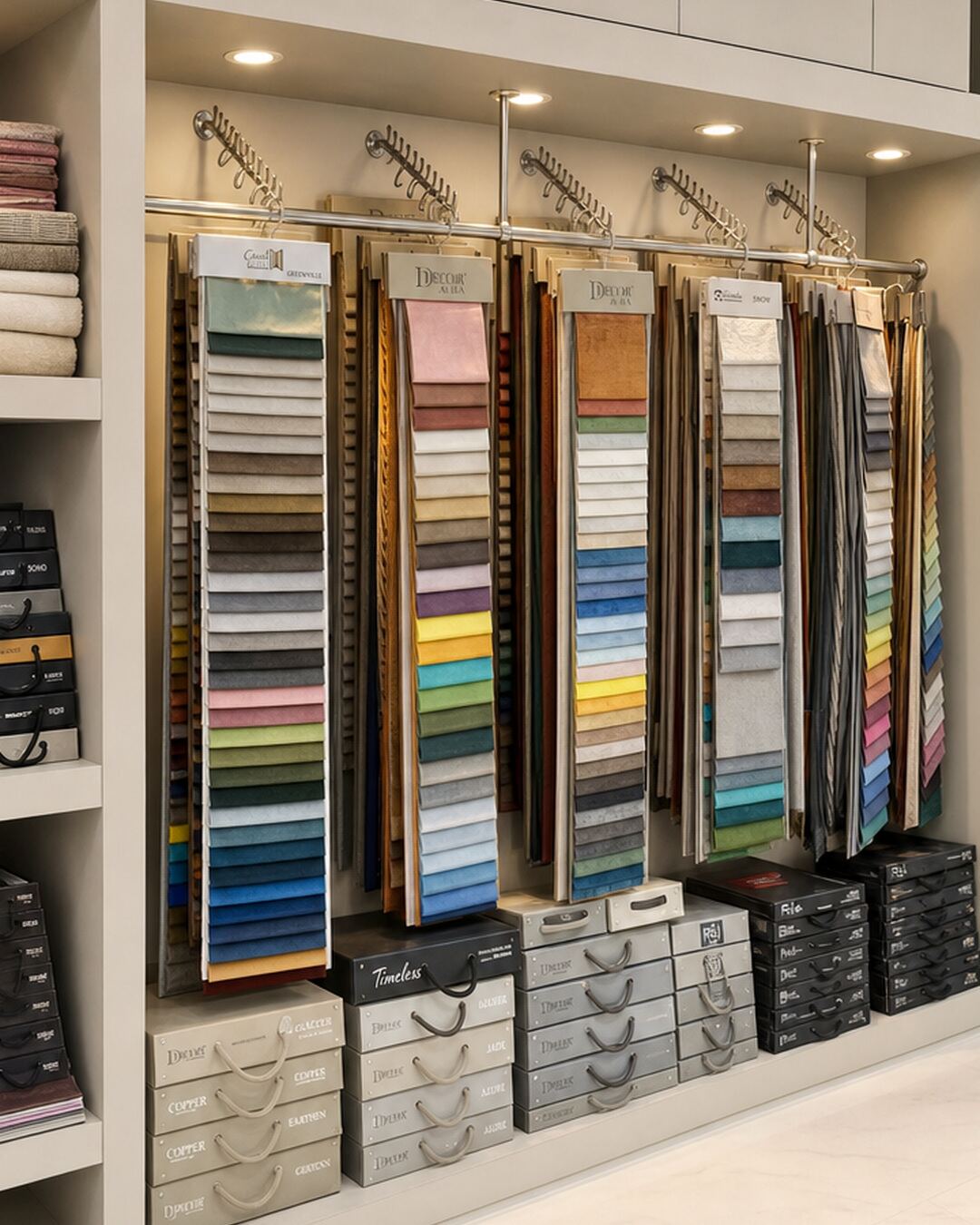
Upholstery is one of the few purchases where a photograph tells you almost nothing. Weight, drape, the way a weave catches the light, whether a texture is pleasant to sit against in July, none of it survives a screen. The fabric hangers are at the showroom and you are welcome to spend as long with them as you need.
Avikar Furniture & Furnishings
46 Central Avenue, Bowbazar, Kolkata, West Bengal 700012
Call or WhatsApp: 8080095551 or 9830200750
Open Monday to Saturday, 10:30 AM to 7:00 PM. Sunday closed.
Sending photographs of your sofa on WhatsApp, along with approximate dimensions, is the quickest way to get a useful answer before you visit.