
Most people in Kolkata do not set out to redesign their home. They set out to fix one thing. The curtains have gone limp after three monsoons. The sofa fabric has thinned at the arms. The bedroom floor never quite recovered from the year the water came in. Then they fix that one thing, and discover it has made everything around it look worse.
That is the problem interior furnishing actually solves, and it is not the same problem a turnkey interior contract solves. Furnishing is the layer you live against every day: the floor under your feet, the fabric at the window, the seat you drop into at the end of the day. Get that layer right and an ordinary flat reads as considered. Get it wrong and no amount of lighting will rescue it.
We have been selling that layer from 46 Central Avenue since 1971. What follows is how we would tell you to approach it.
Furnishing and interior design are two different purchases
This distinction costs Kolkata homeowners more money than any other single misunderstanding, so it is worth being blunt about.
An interior designer or turnkey firm handles the structural layer: layout changes, false ceilings, civil work, carpentry, modular kitchens, wardrobes. It is quoted whole-home, usually per square foot, and it runs for months. It is the right service when you are gutting a flat.
Furnishing is the surface and soft layer: flooring, curtains, blinds, upholstery, sofas, chairs, mattresses, wallpaper. It can be done room by room. It is largely reversible. You can do the drawing room before Durga Puja and leave the bedroom until February.
A great many people searching for interior furnishing in Kolkata want the second thing and get quoted for the first. If your walls and kitchen are staying where they are, you do not need a design contract. You need someone who can make five categories of product agree with each other.
Decide in this order: floor, window, seating
There is a correct sequence, and it is dictated by how hard each decision is to undo.
Floor first. It is the largest uninterrupted surface in the room and by far the most disruptive to change later. It also sets the temperature of everything above it: a warm oak-toned floor and a cool grey floor will not take the same curtain. If you are choosing between solid, engineered, laminate and SPC, our flooring comparison for Kolkata homes covers how humidity narrows the field.
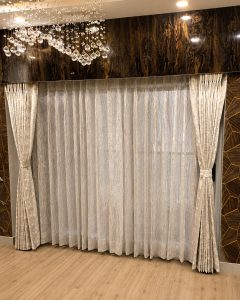
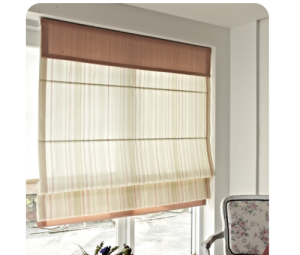
Window second. Window treatment controls the light, and light is what every fabric and finish in the room will be judged under. Settle the hard question first — do you want to block light, filter it, or control it hour by hour — before you look at a single colour. Our window blinds buying guide and curtains guide both work through that choice.
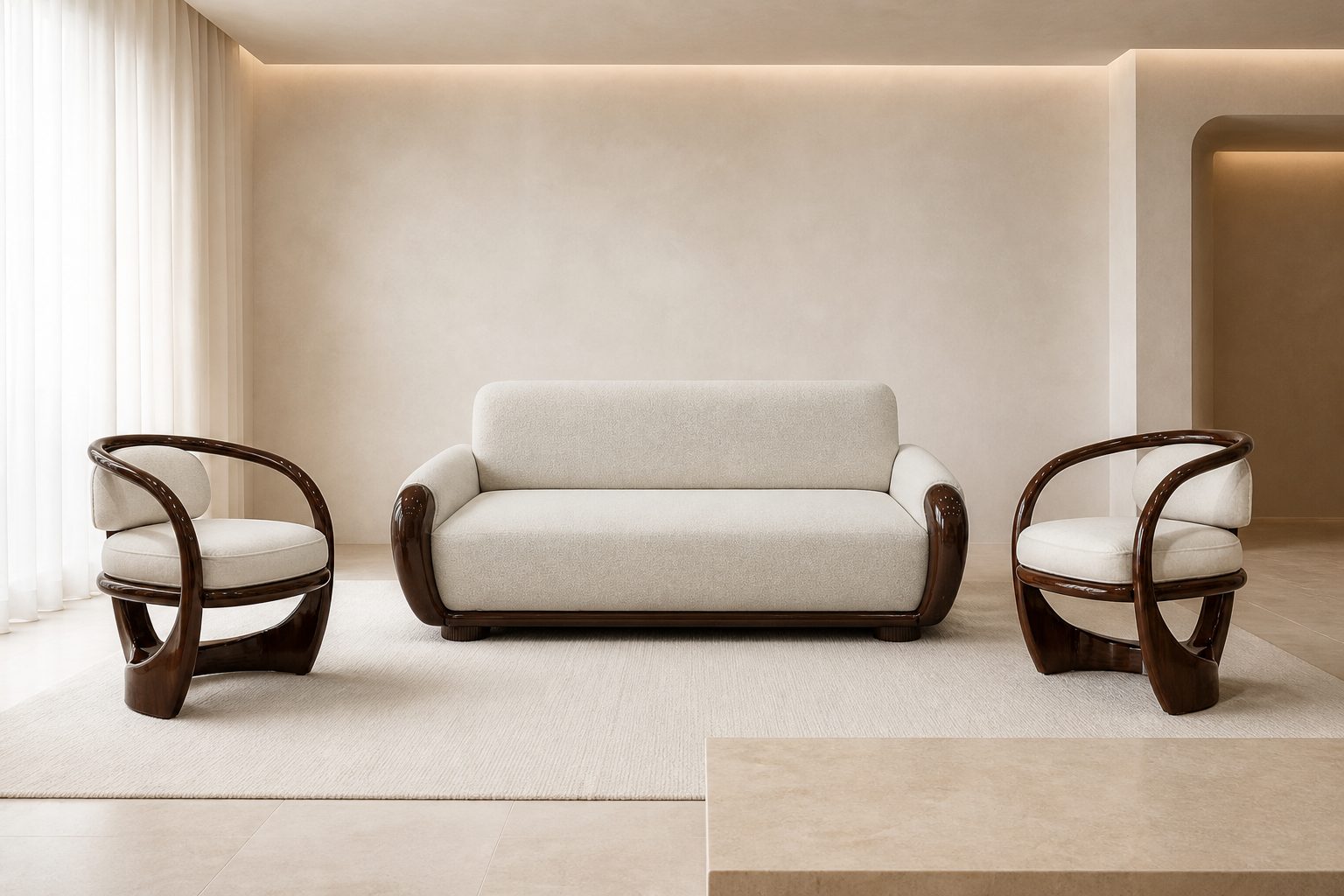
Seating third. Sofas and chairs are the easiest pieces to replace, so they should absorb the compromise rather than create it. Choosing a sofa against a floor and a light quality that are already settled is a far simpler decision than the reverse. See the sofa buying guide, and the accent chairs guide for the pieces that finish a room.
The common failure is exactly the reverse order: someone falls for a sofa, buys it, and then spends six months trying to find a floor and a curtain that will forgive it.
What Kolkata decides for you before you decide anything
Our climate removes several options from the table, and it is cheaper to accept that early.
Sustained monsoon humidity is hard on solid timber, and on heavy lined drapery in rooms that never fully dry — north-facing bedrooms and enclosed verandahs especially. Engineered and stone-polymer-core floors were built for this, and are the safer specification on ground floors and in older buildings with rising damp.
Then there is the west light. Between March and June a west-facing drawing room in this city is not a lighting condition, it is a heat problem. That room needs a blackout or heavily lined treatment, or a blind working behind a sheer, and it needs deciding at the planning stage rather than buying in panic in April.
Dust is the third factor nobody plans for. Anything facing a main road — and Central Avenue is a fair benchmark — should be specified with cleaning in mind. Roller and PVC blinds wipe down; multi-layer drapery does not.
A room-by-room order of decisions
| Room | Settle this first | Then this | Watch out for |
|---|---|---|---|
| Drawing room | Flooring tone | Curtains, then sofa and accent chairs | West light and glare on the television wall |
| Bedroom | Blackout level at the window | Mattress, then headboard and bed linen | Light leaking down the sides of a short track |
| Dining | Table size against circulation space | Chair upholstery, then window | Pale seat fabric with no stain finish |
| Verandah or balcony | Weather exposure | Bamboo, roller or PVC blinds | Fabric that will not survive driven rain |
| Study or home office | Screen position versus window | A blind for hour-by-hour control | Full-length drapery in a small room |
| Kitchen and bath | Waterproofing and wipe-clean surfaces | PVC blinds or shower curtains | Natural fibre anywhere near steam |
Where furnishing budgets quietly go wrong
Fullness, not fabric price. Curtains that look thin are usually under-measured rather than under-priced. Fabric that is not gathered generously enough will look cheap in an expensive weave and expensive in a modest one. This is the single most common regret we hear across the counter.
Choosing upholstery by appearance alone. A fabric that photographs beautifully and abrades in eighteen months is a false economy on a sofa a family of five uses daily. Rub count, weave tightness and cleanability matter more than pattern — our upholstery fabric guide goes into the specifics.
Judging materials under showroom light. Always carry a sample home and look at it in your own room, at the hour you actually use that room. Every showroom in this city, ours included, is lit to flatter.
Ordering from five shops at once. Different suppliers mean different lead times, and installation is sequential — flooring before curtain tracks, tracks before large furniture arrives. Uncoordinated orders end with an installer standing in a room he cannot work in.
One roof versus five shops
The hard part of furnishing is rarely finding a good curtain or a good sofa. It is making the curtain, the sofa, the floor and the wall agree with each other — and if those four things live in four different showrooms across the city, you are matching from memory and phone photographs. Phone photographs lie about colour, especially under mixed light.
That is why our showroom carries curtains, blinds, upholstery fabrics, sofas, accent chairs, mattresses, flooring and wallpaper in the same building, and why our in-house interior stylist, Gaitry Sood, will sit with samples of all of them on one table. You see the combination before you commit to it, one team measures, and one team installs in the right order. You can read more about how that works on our home furnishings page.
It is the same approach we take on hospitality and commercial projects, and the reason architects and designers work with us on specification-led jobs.
Frequently Asked Questions
What is included in interior furnishing?
Interior furnishing covers the surface and soft layer of a home: flooring, curtains, blinds, upholstery fabrics, sofas and chairs, mattresses, wallpaper, curtain rods and accessories. It does not usually include structural work such as false ceilings, civil work, modular kitchens or built-in wardrobes, which fall under a turnkey interior design contract.
Do I need an interior designer to furnish my flat in Kolkata?
If your layout, kitchen and walls are staying as they are, generally no. What you need is help coordinating materials, and that is what a furnishing showroom with an in-house stylist provides. A designer becomes worthwhile when you are changing the structure of the space rather than dressing it.
What should I buy first when furnishing a new flat?
Flooring, because it is the hardest thing to change afterwards and it sets the tone of everything above it. Then window treatments, because they control the light. Then seating and soft furnishings, which are the easiest to swap later.
Can I furnish one room at a time?
Yes, and for most families it is the sensible way to do it. The one thing worth settling up front is the flooring direction for the whole home, since two unrelated floor finishes running through connected rooms is difficult to resolve later. Everything else can be staged room by room.
How long does furnishing a home take?
It depends almost entirely on how much is made to measure. Ready stock moves quickly; custom curtains, reupholstery and made-to-measure blinds need fabrication time, and flooring needs the site to be ready. We give honest dates for your specific selections at the consultation rather than a general figure here.
Do you work with architects and interior designers?
Regularly, on both residential and commercial projects. Designers typically use us for specification, sampling, measurement and installation of the furnishing layer while they handle the design and the structural scope.
Bring your room to us before you commit to it
Bring your floor plan and a photograph of the room in its usual light, and our stylist will lay out curtains, blinds, upholstery, flooring and furniture options side by side on one table. Consultation is free.
Avikar Furniture & Furnishings
46 Central Avenue, Bowbazar, Kolkata, West Bengal 700012
Call or WhatsApp: 9830200750 | Message us on WhatsApp
Book a free consultation