
Honeycomb blinds are the one window covering people ask about by benefit rather than by name. Almost nobody walks into the showroom asking for a cellular shade. They ask whether the pleated fabric thing they saw online will actually keep the bedroom cooler in May. It is a fair question and it deserves a better answer than the internet currently gives it.
Almost every guide to honeycomb blinds is written for a climate that is not ours. The energy figures quoted come from American, British and Australian sources where the problem is heat escaping through a single-glazed window in winter. Kolkata has the opposite problem: relentless heat pushing in for the better part of the year, plus a monsoon that punishes fabric fitted carelessly. Here is what honeycomb blinds actually do in that context, which windows justify the spend, and where we would steer you somewhere else entirely.
What a honeycomb blind actually is
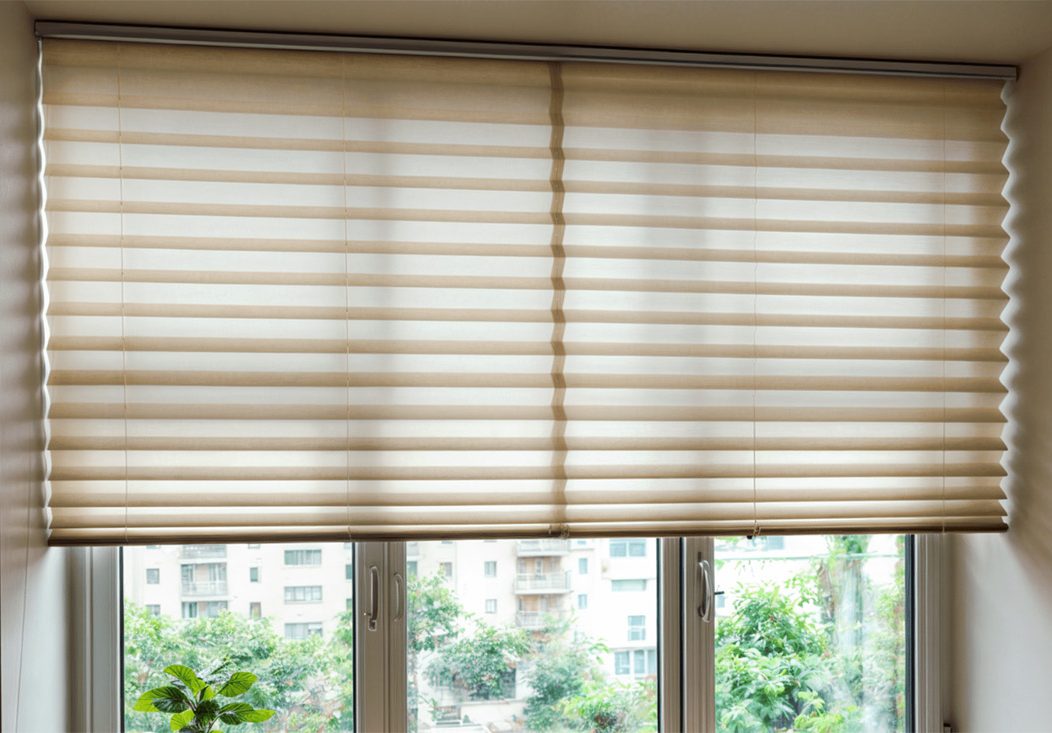
Look at one edge-on and you will see rows of six-sided pockets, like a slice of honeycomb. That is where the name comes from. The fabric is a nonwoven polyester, folded and bonded so that every pleat forms a sealed cell, and each cell holds a pocket of still air. Still air is a poor conductor of heat. That is the whole principle, and it is the same one behind double glazing and a down jacket.
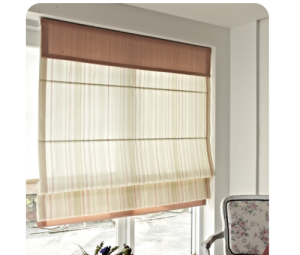
The other quality worth knowing is the stack. A honeycomb blind collapses into a remarkably tight bundle when raised, tighter than a Roman blind and far tighter than a curtain gathered at the side. On a window where the view is the point, that matters more than most buyers expect.
The insulation claim, translated for a Kolkata summer
Yes, a honeycomb blind slows heat transfer through a window. No, it will not turn a west-facing room into a cool one by itself, and anyone who promises that is selling rather than advising.
What it does in practice is reduce the load on your air conditioner. On a bedroom that takes direct afternoon sun from March through June, a well-fitted cellular blind cuts the amount of heat reaching the room air, so the compressor cycles less often to hold the same setting. Households tend to notice it as a room that reaches its set temperature faster and holds it more steadily, rather than as a dramatic reading on a thermometer.
How large that benefit is varies enormously from window to window, which is exactly why we will not quote you a percentage. A small north-facing window in a shaded lane gains very little heat to begin with, so insulating it saves very little. A wide west or south-west facing glass panel is where the money goes to work.
Fit is the whole game
This is the part most sellers skip, and it matters more than the fabric grade you choose.
A honeycomb blind insulates by holding a still pocket of air between the glass and the room. If there is a two-inch gap running down each side, hot air simply convects around the blind and into the room, and what you have bought is a decorative pleated panel. Fitted snugly inside the window reveal, with minimal side clearance and the headrail tight to the top of the opening, the same blind performs as intended.
In Kolkata that means the reveal has to be measured properly, and older flats in this city rarely have square openings. Window grilles, projecting sills, chajjas and retro-fitted split AC units all change what is possible. We measure on site for precisely this reason. A blind ordered off a quick tape measurement across the glass is the single most common way this product disappoints its owner. Our guide on how to measure for curtains explains the same reveal-versus-face-fix decision if you want to understand it before we visit.
Single cell or double cell?
A single-cell blind has one row of air pockets. A double-cell has two rows nested together, trapping more air and insulating measurably better, at the cost of a thicker stack when raised and a higher price per square foot.
Our honest position after decades of fitting windows in this city: double cell is worth paying for on the two or three windows in a home that genuinely bake, and unnecessary everywhere else. Specifying double cell across an entire flat is how a sensible upgrade quietly becomes an expensive one. Tell us which rooms are unbearable in May and we will put the money there.
Where honeycomb blinds earn their place in a Kolkata home
| Window or room | Why honeycomb suits it | Worth considering instead |
|---|---|---|
| West-facing bedroom | Heat gain is the main complaint here; blackout cellular fabric cuts glare and AC load in one move | Layer with blackout curtains if you also want the room quieter |
| Air-conditioned study or home office | Steadier room temperature through the working day, and the cells absorb a little ambient noise | Nothing better at this size |
| Tall living-room glazing with a view | Tightest stack of any blind when raised, so it clears the glass almost completely | Sheer curtains layered behind for evening softness |
| Bedroom overlooked by the building opposite | Top-down/bottom-up operation gives daylight above, privacy below | Zebra blinds, with the night-time caveat we set out there |
| Kitchen, bathroom, utility balcony | Not recommended. Open cells trap grease, steam and damp | PVC roller blinds |
| Wide sliding doors and office glazing | Possible, but heavy and slow to operate across a long span | Vertical blinds, which we fit from the same specialty blinds range |
Where we would talk you out of them
Kitchens, bathrooms and open utility balconies, first of all. The cells are open-ended pockets. Cooking vapour and steam settle inside them and cannot be scrubbed out the way a PVC slat can simply be wiped down. We fit PVC roller blinds in those rooms instead, and we would rather say so before you buy than after.
Very wide spans, second. Past a certain width a honeycomb blind becomes heavy, sags slightly along the headrail and is tiresome to raise by cord. For a sliding balcony door or an office window wall, vertical blinds do the same job better and cost less. If the span is wide and the look matters more than the width, wooden blinds are the other honest answer.
And any window that stays open through the monsoon, which brings us to the part nobody writes about.
Living with them through a Kolkata monsoon
The failure mode for cellular fabric in this city is not sunlight. It is a blind left lowered against a window that is being rained on through an open casement. Polyester itself does not rot, but persistent damp sitting inside the cells, in a room with little air movement, is how mildew spotting begins on any fabric blind.
The management is simple, and it is the same advice we give for Roman blinds. Raise them when the window is open in heavy rain and let the room breathe. For routine cleaning, a vacuum on a low setting with the soft brush attachment run along the pleats is enough. The cells are not built to be washed, soaked or dry cleaned.
Light control: blackout, light-filtering and top-down/bottom-up
Cellular fabric comes in two broad families. Light-filtering fabric glows softly and evenly, which is the reason the product photographs so well, and gives daytime privacy without darkness. Blackout fabric carries an opaque liner inside the cells and is the version to specify for a bedroom, particularly for anyone working night shifts or with small children who sleep through the afternoon.
The feature genuinely worth paying for in a dense Kolkata neighbourhood is top-down/bottom-up operation. The blind can be lowered from the top rather than raised from the bottom, so sky and daylight keep coming in over the top of the window while the lower half stays covered against the flat opposite. For a second-floor bedroom on a narrow street, nothing else solves that problem as neatly.
Cordless, corded and motorised
A standard corded honeycomb blind is fine on most windows. Cordless versions, raised and lowered by hand on the bottom rail, are the sensible specification in a child room and look cleaner on a plain window.
Motorisation makes most sense on the windows you cannot comfortably reach: stairwell glazing, high living-room panels, anything sitting above a fixed piece of furniture. If you are weighing it up for a whole home rather than one window, our article on whether motorised blinds are worth it sets out the trade-offs plainly, and our motorised blinds page covers what we fit and install.
For a wider view of how honeycomb sits against every other blind type we stock, our complete window blinds buying guide compares them side by side.
Frequently Asked Questions
Do honeycomb blinds really keep a room cooler in Kolkata?
They reduce how much heat reaches the room through the glass, which mostly shows up as your air conditioner working less hard to hold a temperature rather than as a dramatic drop on a thermometer. The effect is real but moderate, and it depends heavily on which way the window faces and how snugly the blind is fitted inside the reveal. On a west-facing bedroom window, it is worth the money. On a small shaded window, it is not.
Are honeycomb blinds better than curtains for insulation?
For heat moving through the glass, a well-fitted cellular blind generally does more than a single curtain panel, because the sealed cells hold still air right against the window. A heavy lined blackout curtain hung close to the wall with generous overlap performs comparably and also absorbs sound. Plenty of Kolkata homes end up doing both: blind for the day, curtain for the night.
Can honeycomb blinds be used in a kitchen or bathroom?
We advise against it. The cells are open pockets that collect steam and cooking grease and cannot be wiped clean. PVC roller blinds are the right product for those rooms and cost less.
What is the difference between single cell and double cell honeycomb blinds?
Double cell has two nested rows of air pockets instead of one, so it insulates better but stacks thicker when raised and costs more per square foot. Put double cell on the windows that genuinely overheat and single cell everywhere else.
How do you clean honeycomb blinds?
Vacuum along the pleats on a low setting with a soft brush attachment. Spot-clean marks gently with a barely damp cloth and let them dry fully in open air. Do not soak, machine wash or dry clean them, as water sitting inside the cells will distort the pleats permanently.
Do honeycomb blinds give privacy at night?
Blackout cellular fabric does, because light cannot pass through it in either direction. Light-filtering fabric will show silhouettes once your lights are on after dark, which is the same limitation we explain in our zebra blinds guide. For a street-facing bedroom, specify blackout.
Can I see the fabrics before ordering?
Yes. Bring your measurements to the showroom at 46 Central Avenue and look at the cells, the fabric weights and the stack depth in daylight. Photographs flatten the difference between light-filtering and blackout almost completely, and the difference is obvious in the hand.
Feel the difference between the fabrics in daylight
Bring your window measurements, or let our team measure on site and tell you honestly which windows in your home justify a cellular blind and which do not. Every blind we supply is made to your exact window and installed by our own fitters, for over 6,500 Kolkata homes and businesses so far.
Avikar Furniture & Furnishings
46 Central Avenue, Bowbazar, Kolkata, West Bengal 700012
Monday to Saturday, 10:30 AM to 7:00 PM. Sunday closed.
Call or WhatsApp 9830200750 | Message us on WhatsApp
See the full range on our specialty blinds page
Furnishing Kolkata homes since 1971.