
A mattress is the one piece of furniture you spend a third of your life on, and the one most people choose in about twenty minutes. It is also the purchase where the advice online helps least in Kolkata. Nearly every guide you will find is published either by a brand that happens to make one kind of mattress, or by a site writing for a house with central heating, a dry winter and a slatted timber bed frame.
None of that describes a flat in Bowbazar, Salt Lake or Behala. Here a mattress has to survive nine humid months, it usually sits on a sealed plywood storage box rather than a slatted base, it often goes on a bed a carpenter built to no standard size at all, and it has to get up the staircase before any of that matters. We have been furnishing Kolkata bedrooms since 1971. This is the order the decisions actually come in.
Start with the bed base, not the mattress
Most Kolkata bedrooms use a box bed: a storage compartment with a sheet of ply or block board laid over it. It is a sensible answer to a small flat, and it is also the most common reason a perfectly good mattress fails early.
A sealed platform leaves the mattress no airflow underneath. Through the monsoon and the humid weeks either side of it, the moisture your body gives off overnight has nowhere to go but down into a closed box. The mattress then fails from the bottom up. The underside darkens, then it smells, and by the time anything shows on the sleeping surface the foam beneath has already broken down. The mattress gets the blame. The base was the problem.
Three fixes, in order of how well they work. Ask the carpenter to cut ventilation holes through the platform before the mattress goes on, six or eight of them, a couple of inches across. Better, have the platform made in slats with a finger’s width between them, which is how imported bed frames are built and simple enough to copy locally. If the bed is already built and sealed, stand the mattress on its side against a wall for two or three hours every few weeks between June and September, and leave the storage box open while it airs.
Foam and memory foam suffer most from a sealed base. A spring unit breathes through its own structure and is far more forgiving of one.
Measure the inside of the frame, not the room
Indian mattress sizes are standard enough on paper. The confusion is in the length: a six foot bed is 72 inches and a six and a half foot bed is 78 inches, and both are sold under the same size name.
| Size name | Width x length (inches) | Roughly (cm) | Usually chosen for |
| Single | 36 x 72 or 36 x 78 | 91 x 183 / 91 x 198 | One adult; children’s and staff rooms |
| Small double | 48 x 72 or 48 x 78 | 122 x 183 / 122 x 198 | A couple in a compact bedroom; an older child |
| Queen | 60 x 72 or 60 x 78 | 152 x 183 / 152 x 198 | The commonest double in Kolkata flats |
| King | 72 x 72 or 72 x 78 | 183 x 183 / 183 x 198 | Larger master bedrooms |
| Non-standard | Taken from your own frame | — | Carpenter-built teak and sheesham beds |
The bigger trap is the bed itself. A great many Kolkata bedrooms still have a solid teak or sheesham bed built by a carpenter in the 1980s or 1990s, and those were made to the timber available rather than to a size chart. Frames of 74 by 54 inches, or 75 by 57, are common. Put a standard mattress into one and you get a gap along one edge that swallows pillows, chargers and small children’s arms. Force an oversized one in and it domes in the middle within a year.
So measure the inside of the frame before you look at anything else, at both ends in case the frame is slightly out of square. If your bed is not a standard size, say so in the showroom and ask what can be made to order rather than trying to make a stock size fit. The same measurement discipline applies if you are having an upholstered headboard made at the same time.
Spring, memory foam or orthopedic: what each one is actually for
We keep all three constructions in the showroom, and the honest position is that none of them is best. They solve different problems.
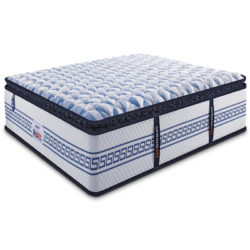
Spring. A steel spring unit under a comfort layer. Bonnell springs are interlinked and move as a sheet; pocket springs sit in individual fabric sleeves and move independently, which is what stops one person turning over from waking the other. Springs are the most breathable construction, which counts for a great deal in this climate, and they carry heavier sleepers without bottoming out.
Memory foam. Viscoelastic foam that softens where your body warms it, so the shoulder and hip sink in while the waist stays supported. That is genuinely useful for side sleepers and for pressure points. The trade-off is heat: memory foam holds warmth by design and gets softer as the room gets hotter, so a May night in Kolkata feels different from a January one. If you want memory foam here, look for an open-cell or gel-infused top layer and a breathable cover rather than a plain slab.
Orthopedic. Worth being blunt about this one: orthopedic is a marketing description, not a certification, and no mattress is medically approved. What the label means in practice is a firmer, higher-density support core built to hold the spine level rather than let the hips drop. That suits back and stomach sleepers and many people with general lower back ache. If you have a diagnosed spinal condition, your doctor’s or physiotherapist’s instruction outranks anything a showroom tells you.
| Construction | How it feels | Best for | Airflow in Kolkata humidity | Motion transfer |
| Bonnell spring | Firm, bouncy, uniform | Guest rooms, firmer sleepers | Very good | High — movement carries across |
| Pocket spring | Supportive with independent give | Couples, mixed weights, hot sleepers | Very good | Low |
| Memory foam | Contours slowly, cradles | Side sleepers, pressure relief | Fair — needs a gel or open-cell layer and a ventilated base | Very low |
| High-density orthopedic foam | Firm and level, minimal sink | Back and stomach sleepers, general back ache | Fair — needs a ventilated base | Low |
| Pillow-top over springs | Soft surface on a firm core | Plushness without losing support | Good | Depends on the spring type |
| Folding mattress in a sofa-cum-bed | Thinner and firmer by necessity | Occasional guests, not nightly sleeping | Good | Not applicable |
Firmness follows your weight and how you sleep
Firmness is not a taste, it is a fit. Your sleeping position decides the shape your spine needs to hold, and your weight decides how much resistance it takes to hold it there.
Side sleepers need the surface to give at the shoulder and hip, or the spine bends sideways all night, so softer to medium. Back sleepers want the small of the back supported without the hips sinking: medium to medium-firm. Stomach sleepers need the firmest option available, because any sag arches the lower back. And two people of very different weights will experience the same mattress as two different firmnesses, which is the strongest argument for pocket springs or a zoned support core.
Medium-firm is the safe default when you genuinely cannot decide. But firmness ratings are not standardised between manufacturers, so one company’s firm is another’s medium, and no chart will settle it. That is a problem you can only solve lying down.
In foam, density decides how long it lasts, not thickness
The number printed on the box is usually thickness in inches, because it is the easy one to compare. The number that predicts how the mattress will feel in year four is density, measured in kilograms per cubic metre, and you often have to ask for it.
A thick mattress built from low-density foam feels generous in the showroom and develops a permanent hollow at hip height within a couple of years. A thinner mattress with a high-density support core will still be level long after it. As a rough guide, six inches is the sensible minimum for a foam mattress and eight is comfortable, but treat those as a floor rather than a specification.
Read the warranty the same way. One that only pays out once the sag exceeds a stated depth is telling you precisely how much sag the maker expects.
Check the staircase before you order a spring king
This has caught enough people out to belong high on the list. A pocket-spring mattress cannot be folded, rolled or bent. The springs and the border wire will not allow it, and bending one damages it and usually voids the warranty. It has to travel flat or on its edge, as one rigid slab.
In the older buildings of Central and North Kolkata that is not always possible. Lifts installed in the 1970s and 1980s often will not take a 72 by 72 inch slab upright, and the stairwells in those buildings turn tightly at every landing. Foam mattresses are far more forgiving, and roll-packed foam will go almost anywhere.
Measure the lift car and the tightest turn on your staircase before you order, not on the morning of delivery. If the numbers are marginal, that is a reason to choose foam over springs, or to size down from a king.
Why lying on it still beats a trial period
Online mattress brands lead with a hundred-night trial, and on paper it removes the risk. The part that goes unmentioned is the return: arranging a courier to collect a king mattress from a third-floor walk-up, and sleeping badly in the meantime. Most people simply keep it.
Ten minutes in a showroom settles more. When you try one, lie in the position you actually sleep in rather than flat on your back, and stay there long enough for your shoulders to settle, because thirty seconds tells you nothing. If two people are going to sleep on it, both of you should lie on it at once. Then try the mattress either side of it in firmness, so you leave with a comparison rather than an impression.
Our Bowbazar showroom keeps memory foam, orthopedic and spring mattresses set out side by side for exactly this, and nobody will hurry you off them. Doorstep delivery afterwards is free and handled by our own team rather than a third-party courier.
Keeping a mattress alive through a Kolkata monsoon
Use a mattress protector, but a breathable one. A plastic or PVC sheet keeps spills out and traps every bit of body moisture in, which in this climate is a poor trade. A cotton-backed waterproof protector does both jobs properly.
Rotate the mattress head to foot every three months so the heaviest-loaded areas move. Do not flip a pillow-top or any single-sided mattress; only a genuinely two-sided one is built to be turned over.
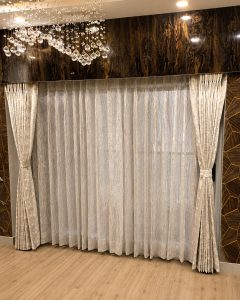
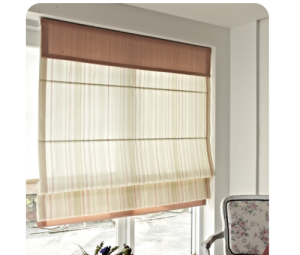
Air the room, not just the mattress. If the bedroom has an air conditioner, its dehumidify mode does more for a mattress through August than anything you can buy for it. Avoid storing quilts compressed inside a box bed all monsoon, since they hold damp against the underside. And keeping daytime heat and glare out of the bedroom helps the whole room, which is where a lined or blackout curtain earns its place.
Frequently Asked Questions
Which mattress is best for back pain in Kolkata?
For most people with general lower back ache, a medium-firm mattress with a high-density support core holds the spine level without creating pressure points, which is what the orthopedic ranges are built to do. Side sleepers usually need a little more give at the shoulder than a plain firm mattress offers. If your back pain has been diagnosed as a specific condition, follow your doctor’s or physiotherapist’s advice first. A mattress can support their treatment, not replace it.
Is memory foam a bad idea in Kolkata’s climate?
Not bad, but it needs choosing carefully. Memory foam retains heat and softens as the room warms, so a plain memory foam slab feels very different in May than in December. Look for an open-cell or gel-infused comfort layer and a breathable knitted cover, and make sure the bed base underneath is ventilated. If you sleep hot anyway, a pocket-spring mattress with a foam comfort layer usually suits this climate better.
What size mattress do I need for an Indian double bed?
A standard Indian queen is 60 inches wide, and a king is 72 inches wide. Both come in 72 inch and 78 inch lengths, depending on whether the bed is described as six foot or six and a half foot, so always confirm which. A smaller double is 48 inches wide. Measure the inside of your bed frame rather than relying on the size name.
My bed is an old carpenter-built size. Can I still get a mattress for it?
Very often, yes. Non-standard frames are common in older Kolkata homes. Bring the internal measurements of the frame, length and width taken at both ends, and we will tell you in the showroom what can be made in which construction.
How long should a mattress last?
A well-made mattress on a ventilated base should stay comfortable for several years before it begins to hollow, and the density of the support core matters far more to that than thickness. The clearest signs it is finished are waking stiff in a way that eases once you are up and moving, or a dip along the hip line you can feel with your hand.
Will a spring mattress fit up my building’s staircase?
Check before you order. A pocket-spring mattress cannot be bent or rolled, so it needs a lift car or stairwell that will take the full slab on its edge, and many older Central and North Kolkata buildings will not. Foam mattresses, especially roll-packed ones, go up almost anywhere. Tell us about the access when you choose and we will steer you accordingly.
Can I try the mattresses in the showroom before buying?
That is what the showroom is for. Memory foam, orthopedic and spring mattresses are all set out at 46 Central Avenue so you can lie on them one after another and compare properly, with no time limit and no pressure. Free doorstep delivery follows once you have decided.
Come and lie on a few
Choosing a mattress from a specification sheet is guesswork. Choosing it lying down takes ten minutes and you will know. Avikar has been furnishing Kolkata homes since 1971, more than 6,500 households have bought from us, and our Google rating stands at 4.7.
Avikar Furniture & Furnishings
46 Central Avenue, Bowbazar, Kolkata, West Bengal 700012
Monday to Saturday, 10:30 AM to 7:00 PM. Sunday closed. Parking on request.
Call or WhatsApp 8080095551
See the full range on our mattress showroom page. If you are putting a whole bedroom together, our guides to upholstered headboards, solid wood bedroom furniture and furnishing a home without an interior designer pick up where this one leaves off.