Once you have settled that you want an upholstered headboard, the next question is the one people find genuinely hard: which design. Channel or diamond. Tall or wide. Plain fabric or a pattern. Buttons or no buttons.
Search for an answer and you will land on Etsy listings, Pinterest boards and American furniture blogs. All of them treat this as a purely visual decision, which is why so many headboards look right in the showroom and wrong once they are on the wall. In a Kolkata bedroom the design is decided by four things before taste gets a say: the height of your ceiling, whether there is a window or an AC behind the bed, where the plug points sit, and how much dust and hair oil the surface will have to survive.
We have been padding headboards in this city since 1971. Below is how we actually work through the choice, illustrated with beds we have made. If you have not yet settled the construction questions — foam density, fabric type, how it fixes to a damp wall — read our guide to choosing foam, fabric and fixing first. This article assumes those are handled and deals only with the look.
The four designs worth considering
Almost every upholstered headboard is a variation on four ideas. Everything else is a hybrid.
Channel. Padding is divided into long parallel tubes, usually vertical, sometimes horizontal. No buttons, no wells. It is the most forgiving design in this climate and the one we make most often.
Diamond or buttoned tufting. Buttons pull the fabric down into the foam on a grid, raising diamonds or squares between them. The most formal of the four, and the most work to keep clean.
Geometric panelling. Blocks, chevrons or herringbone worked in flat padded sections with stitched seams instead of buttons. Gives pattern without wells.
Plain slab. One uninterrupted padded panel. Sounds dull, and is the correct answer more often than people expect, particularly when there is already a pattern on the wall.
Ceiling height decides vertical or horizontal
This is the first cut, and it is architectural rather than aesthetic.
Old houses in Central and North Kolkata — Bowbazar, Shyambazar, the Beadon Street side — commonly run eleven to thirteen feet floor to ceiling. Those rooms can carry a tall headboard, and vertical channels suit them because they repeat the height of the room instead of fighting it. In a room like that a headboard that stops just above the pillows looks stranded on the wall.
A newer flat in Salt Lake, New Town or a Behala highrise is a different proposition. Floor to slab is often around ten feet, and once a gypsum false ceiling and cove lighting go in you may be left with nine feet or less. Push a tall vertical board up into that and the room closes in. Horizontal channels or a wide, lower panel read better, because the eye travels sideways rather than up into a ceiling that is already low.

Width is the cheapest upgrade in the room
Most people ask us to make the headboard taller. The change that transforms a bedroom is almost always making it wider.
A headboard cut to the exact width of the mattress announces the size of the bed. Carry it three or four feet past the bed on each side, or run it wall to wall, and the eye reads the whole wall as one composition. The bed looks larger, the room looks more considered, and the extra ground is the least expensive part of the job because it is flat padded board rather than joinery.
The extension earns its keep practically too. Indian bedrooms put switchboards and plug points at roughly headboard height, and a standard headboard either covers them or stops short of them awkwardly. An extended board lets us plan cut-outs so the sockets sit in the panel and stay usable — the difference between charging a phone at the bedside and running a wire around the furniture for the next ten years. That has to be decided before the board is built, not after.
Buttons look wonderful and cost you every week
This is where our advice parts company with most of what is written online.
Deep buttoned tufting is genuinely beautiful. It is also, in this city, a maintenance decision disguised as a style decision. Every button sits at the bottom of a small well, and each well collects dust that a cloth passed across the surface does not reach. Kolkata gives you construction dust, road dust and nine humid months in which that dust binds to fabric rather than blowing off it.
Then there is hair oil. At head height it migrates outward from the pillow line and settles wherever it can pool, and the buttonholes are exactly that. A channel or flat-panel board is wiped down in two minutes with a dry microfibre cloth and the vacuum brush attachment. A deep-buttoned board needs a nozzle worked into every well, and it will still shadow around the buttons within a few years.
So the honest rule: choose buttons if you love them and know that you will maintain them, or if the headboard is in a guest room that sees light use. For a master bedroom used every night by people who would rather not think about it, channel or geometric panelling gives you nearly the same richness with a fraction of the upkeep. Shallow stitched tufting without buttons is a fair middle path — the pattern reads from across the room but there are no wells to trap anything.
Look at what is already on the wall
The commonest mistake we correct at the design stage is two patterns competing at the head of the bed.
If the wall behind the bed is papered or panelled, the headboard should be plain or very simply channelled, in a solid colour drawn from the wall. If the wall is plain paint, the headboard is free to carry the pattern — chevron, diamond, blocks, a woven texture. One of them leads. Never both.
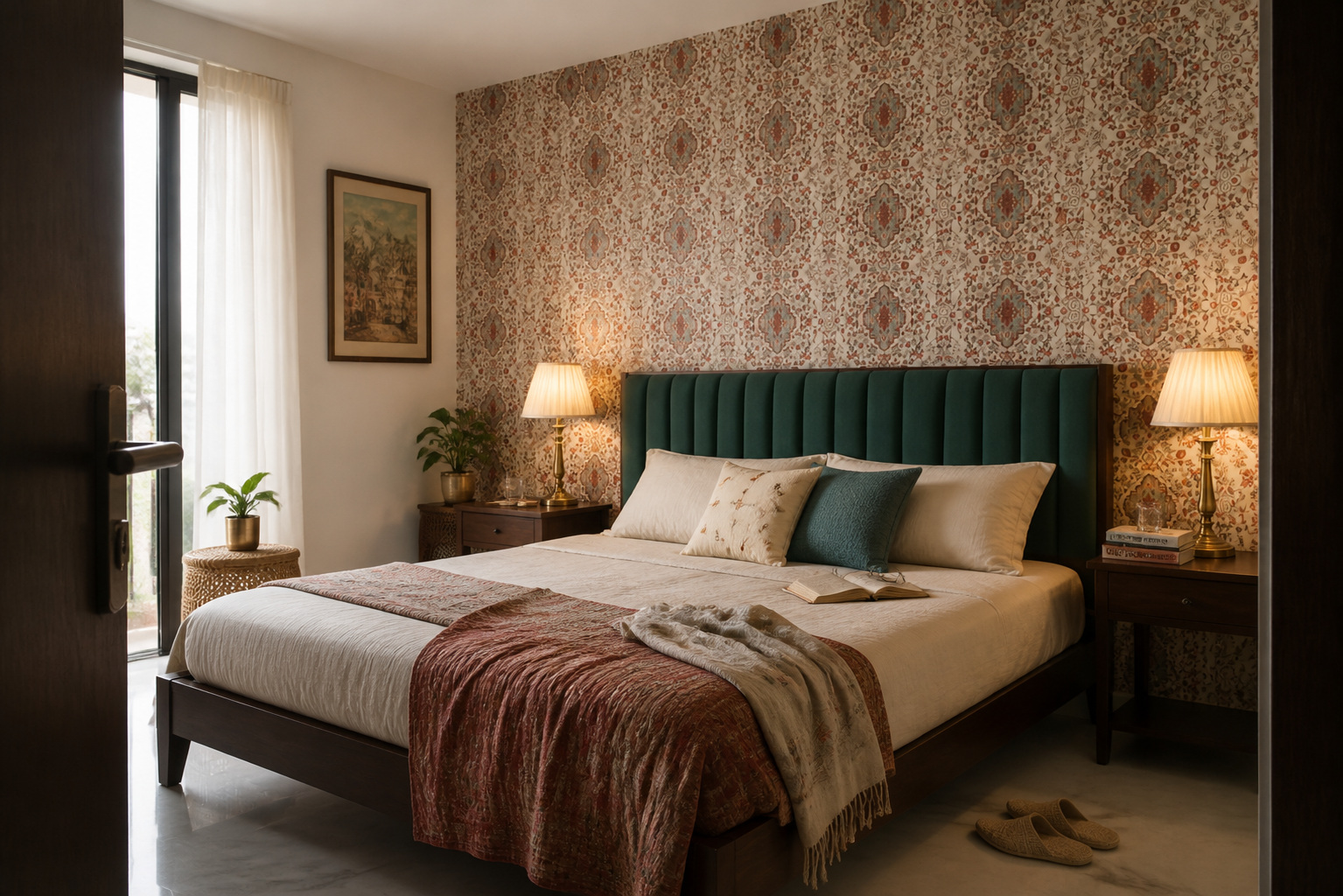

On colour, one piece of hard-won advice. Pale ivories and greys photograph beautifully and are the first thing everybody asks for. At head height, in a city where most of us use some hair oil, a mid-tone — teal, moss, rust, warm tan, a deep grey — will look considerably better in year four. If your heart is set on ivory, ask for it in a tight weave with a stain-resistant finish, and expect to have it professionally cleaned. Our upholstery fabric guide covers weave and finish in more detail.
When there is a window behind the bed
In compact flats the bed frequently has to go against the wall with the window in it, because that is the only wall long enough. Imported design guides never address this because the situation barely arises in the houses they are written for.
The answer is a low, wide headboard that stops below the sill, with the pattern kept horizontal so the reduced height looks deliberate rather than truncated. A tall board here either blocks the glass or forces an ugly notch around it.

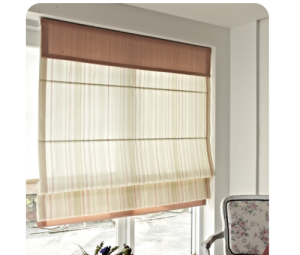
Two details that follow from this. Fabric at the window has to be short — a Roman blind or a blind that sits inside the reveal — because full-length curtains cannot fall past a bed. And if the room needs darkening, the light control moves to the window treatment rather than the headboard, which is where blackout fabric earns its place in a bedroom.
Corner beds, daybeds and children’s rooms
A single bed pushed into a corner to free floor space is standard in children’s rooms, study rooms and small second bedrooms across the city. Give it an upholstered back on both walls and the bed becomes a daybed: a sofa by day, a bed at night, without buying two pieces of furniture.

Keep the design simple here. Channels work; buttons in a child’s room will collect everything a child can produce. Pad the side wall a little lower than the head end so it supports the back at sitting height rather than looming over the bed.
Choosing between the four
| Design | Best in | Cleaning | Watch out for |
| Vertical channel | High-ceilinged older rooms; narrow rooms needing height | Easy — wipe and vacuum along the channels | Velvet nap can read as slightly different tones panel to panel |
| Horizontal channel | New flats with false ceilings; wide walls; below a window | Easy | Dust settles on the upward face of each channel; needs a weekly pass |
| Diamond or buttoned | Formal master bedrooms; guest rooms; period-style interiors | Hardest — every button is a well | Hair oil and dust at the buttonholes; shows first around the buttons |
| Geometric or chevron panels | Plain-painted walls that need a focal point | Easy — seams, not wells | Needs precise workshop stitching; a crooked seam is obvious forever |
| Plain slab | Papered or panelled walls; minimal interiors; rented flats | Easiest | Every mark shows on a plain field, so weave and finish matter most |
One workshop point behind the first row. Velvet has a nap, and light catches it differently depending on which way that nap runs. On a channel board this can be used deliberately for a subtle striped shimmer, or it can look like a mistake if panels were cut without attention to direction. It is worth asking whoever makes your headboard how they handle nap on channelled work.
How we do it at Avikar
Headboards here are made to your bed rather than bought in a size. A technician comes to your home and measures the bed and the wall, including the awkward parts — the socket positions, the window, the wardrobe that opens near the bed line, the false ceiling height. You choose the fabric with a colour consultant from our spill and stain resistant collection, the board is built in our own workshop, and our own team delivers and installs it. That last point matters more than it sounds: the people who measured are the people who fit it.
The design conversation is worth having in person, because a design that suits an eleven-foot Bowbazar ceiling is the wrong design for a nine-and-a-half-foot flat, and a photograph cannot tell you which you have. Bring a picture of the room on your phone and we can usually narrow it to two options in ten minutes. You can see how headboards fit into a whole scheme in our interior furnishing guide, and if the bed itself is being replaced at the same time, our notes on solid wood bedroom furniture and on choosing a mattress cover the rest of the room.
Frequently Asked Questions
Which headboard design is easiest to keep clean in Kolkata?
A plain padded panel, followed closely by channel tufting. Both have a continuous surface that a dry microfibre cloth and a vacuum brush attachment clear in a couple of minutes. Deep buttoned designs are the hardest, because dust and hair oil collect in the well behind each button where a cloth cannot reach.
Should an upholstered headboard be taller or wider?
Wider, in most Kolkata bedrooms. Extending the headboard past the sides of the bed makes the bed look larger and the wall look designed, and flat padded board is the least expensive part of the work. Extra height only pays off in older houses with eleven-foot-plus ceilings; in a modern flat with a false ceiling a tall board can make the room feel lower.
Can I have an upholstered headboard if there is a window behind my bed?
Yes, provided it is kept low enough to sit below the window sill and made wide instead of tall. Use a horizontal pattern so the reduced height looks intentional, and pair it with a Roman blind or a blind fitted inside the window reveal rather than full-length curtains, which have nowhere to fall.
Is diamond tufting old-fashioned now?
No, but it has become a deliberate choice rather than a default. It reads formal and traditional, which suits a period interior or a room you want to feel dressed. If you want that richness with less upkeep, shallow stitched tufting without buttons, or a geometric panelled design, gives a similar effect and no wells to clean.
Can the headboard be matched to my existing wallpaper or curtains?
It can, and it usually should be co-ordinated rather than matched. If the wall is papered or the curtains are patterned, keep the headboard plain in a solid colour drawn from that pattern. Matching a pattern exactly tends to look flat; picking up one colour from it looks intentional.
What about the plug points and switches behind my bed?
Tell us about them at the measuring stage. We can cut the panel around existing switchboards or plan the board so the sockets sit within it and stay reachable. This has to be designed in before the board is built — retrofitting a cut-out into a finished upholstered panel is not a clean job.
Does the design affect the price?
Yes. Buttoned and intricate geometric work takes more labour in the workshop than plain or channelled panels of the same size, and fabric choice moves the figure as much as the design does. Since it is made to your bed and your wall, the only accurate way to price it is a measurement. Bring your bed size and we will quote on it.
Come and see the difference in person
Fabric colour and the depth of a channel are two things a screen cannot show you honestly. Both are worth ten minutes in the showroom before you commit to a design that will be at the head of your bed for the next decade.
Visit us at 46 Central Avenue, Kolkata 700012, open Monday to Saturday, 10:30 AM to 7:00 PM. Parking on request. Call or WhatsApp 8080095551 to talk to a soft interior designer, or book a home measurement through our headboard padding service. We also handle sofa and chair upholstery in the same workshop, so a headboard and a re-covered bedroom chair can be done in matching fabric in one visit.
Avikar Furniture & Furnishings has been furnishing Kolkata homes since 1971, with 6,500+ happy homes and a 4.7 rating on Google.