Cotton and linen are the two fabrics customers ask for most often after they have lived with polyester for a few years. They want something that breathes, something that looks like fabric rather than plastic, something that softens a room instead of sealing it. In Kolkata, that instinct is right — but natural fibres behave differently here than they do in a European catalogue photo, and knowing how they behave before you buy is the difference between curtains you love for a decade and curtains you replace in two monsoons.
We have been fitting curtains from 46 Central Avenue since 1971, across roughly five lakh windows. Here is what we have learned about natural fabrics in this city.
Cotton and linen are not interchangeable
People say “cotton-linen” as if it were one material. It is not.
Cotton is a soft, short-staple fibre. It takes dye beautifully, which is why the deepest, most saturated curtain colours are almost always cotton. It drapes into rounded, generous folds. It is forgiving to stitch, forgiving to wash, and forgiving to your budget. Its weaknesses are that it fades faster in hard sunlight and it shrinks on the first wash if the fabric has not been pre-shrunk.
Linen is a long-staple flax fibre, stronger and thicker. It hangs in flatter, more architectural folds and has a visible slub — the irregular thick-and-thin texture that makes it look expensive from across a room. It resists sunlight better than cotton. Its weaknesses are that it creases readily, it costs more, and washed carelessly it can shrink noticeably.
Cotton-linen blends are the practical middle. You get most of linen’s texture with most of cotton’s softness and stability, at a price between the two. For the majority of Kolkata living rooms, this is what we end up recommending.
What Kolkata’s climate actually does to natural fabric
Three things matter here, and they are all local.
Humidity makes natural fibres heavier and lazier. Cotton and linen absorb moisture from the air. Through July and August, a linen panel will hang slightly longer and feel denser than it did in February. This is normal and it reverses. It also means the fabric wrinkles more easily during the monsoon, so if crisp is what you want, a blend beats pure linen.
Poor air circulation, not the fabric, causes mildew. Curtains that stay bunched shut in a closed, unaired room through the rains will eventually smell. Curtains that get drawn open every morning almost never do. Natural fibres are more breathable than polyester, which works in your favour here — but only if air is actually moving past them.
West and south-west windows are brutal. Kolkata afternoon sun on an unlined cotton panel will visibly lift the colour within a few years, and it fades unevenly — the leading edge that catches the most light goes first. This is the single most common complaint we hear about natural curtains, and it is entirely preventable.
Lining is not an upsell. It is the whole answer.
If you take one thing from this guide: line your cotton and linen curtains on any window that gets direct sun.
A lining sits behind the face fabric and takes the ultraviolet hit instead of it. It also adds weight, which makes natural fabrics hang straighter and crease less — solving linen’s biggest cosmetic flaw at the same time. And it stops the washed-out look that unlined cotton gets when daylight passes straight through the weave.
You have options in how far to take it. A standard cotton lining protects colour and improves drape. A blackout lining does the same and blocks light almost completely, which is why it belongs in bedrooms facing east. And yes, you can put a blackout lining behind a linen face fabric — you keep the natural texture on the room side and get full darkness on the window side. We do this constantly for bedrooms.
Where each fabric earns its place
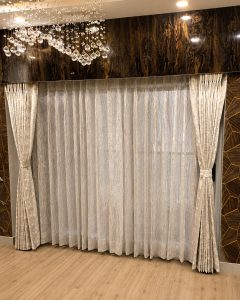
- Living rooms: cotton-linen blend, lined, floor-length. The texture reads as premium, and the lining handles the afternoon sun.
- Bedrooms: cotton or blend face fabric with a blackout lining. Softness where you touch it, darkness where you need it.
- Study and home office: linen or blend, lined. Flatter folds suit a room with clean lines.
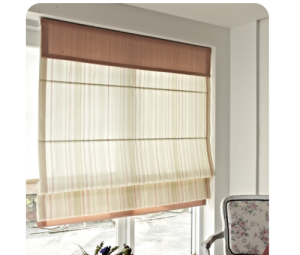
- Kitchens and utility areas: honestly, neither. Natural fibres hold cooking grease and odour. A wipeable roller blind is the correct answer, and we will tell you so.
- Layered schemes: a sheer on the inner track with cotton or linen on the outer track gives you daytime privacy plus evening warmth.
Two mistakes we correct most often
Buying too little fabric. Natural fabrics need generous fullness — two to two-and-a-half times the track width — or they hang flat and look thin, which defeats the entire reason you chose them. A narrow cotton panel does not look minimal. It looks insufficient. Our curtain measuring guide covers how to work this out properly.
Choosing the heading style last. Linen’s flatter fold suits pinch pleats, which control the fabric and give it structure. Soft cotton is happier in eyelets, which let it fall in rounder waves. Picking fabric and heading together produces a better result than picking either one alone, and the same goes for the rod or track you hang it on.
Caring for them without ruining them
Vacuum the panels with a brush attachment every few weeks. That removes most of Kolkata’s dust before it embeds itself and dulls the colour. For lined curtains, dry cleaning is safest, because the face fabric and the lining shrink at different rates in a home wash and the panel puckers permanently.
If you are washing unlined cotton at home, use cold water and a mild detergent, never hot. Hot water is what causes the dramatic shrinkage stories. Line-dry in shade rather than direct sun, and take linen down while it is still slightly damp — hang it, and most of the creasing drops out under its own weight.
One habit worth building: draw your curtains fully open every morning through the monsoon. It costs nothing and prevents nearly every damp-smell problem we get called about.
Frequently Asked Questions
Are cotton or linen curtains a good idea in Kolkata’s humidity?
Yes. Natural fibres breathe better than polyester, which is an advantage in a humid city. They will feel slightly heavier and crease a little more during the monsoon, and they need air circulation — open them daily through the rains and you will not have a problem.
Do linen curtains shrink?
Linen can shrink noticeably on a first hot wash. Cold water and a mild detergent prevent it. For lined or custom-stitched panels, dry clean instead — the face fabric and the lining shrink at different rates in a home wash and the curtain will pucker.
Will cotton curtains fade in the Kolkata sun?
Unlined cotton on a west or south-west window will fade within a few years, and unevenly. A lining prevents this almost entirely by absorbing the ultraviolet before it reaches the face fabric. Linen resists fading better than cotton, but on a harsh window it also benefits from lining.
Which is better, cotton or linen?
Neither, in the abstract. Choose cotton for softness, deeper colours and a lower price. Choose linen for texture, structure and better sun resistance. Choose a cotton-linen blend if you want most of both, which is what most Kolkata living rooms end up with.
Can I get blackout with a cotton or linen curtain?
Yes. The blackout goes in as a separate lining behind the natural face fabric. You see cotton or linen from inside the room and get full room darkening. It is a standard combination for bedrooms.
How much fabric will I need?
Plan for two to two-and-a-half times your track or rod width so the curtain gathers properly. Natural fabrics look thin without that fullness. Our team measures your windows at home free of charge and works out exact quantities, so you are not guessing.
Can I see the fabrics before deciding?
Please do. Cotton and linen are texture fabrics, and texture does not survive a phone screen. Come to the showroom, handle the weaves, hold them against the light. It takes fifteen minutes and it settles the decision.
Come feel the fabric yourself
Avikar has been Kolkata’s curtain destination since 1971. We carry over 5,000 curtain fabrics including pure cotton, linen and textured natural blends, available ready-made or custom-stitched to your window. Measurement at your home is free, and stitching and installation are handled by our own team rather than outsourced. More than 6,500 Kolkata homes have bought their curtains from us.
Avikar Furniture & Furnishings
46 Central Avenue, Bowbazar, Kolkata, West Bengal 700012
Monday to Saturday, 10:30 AM to 7:00 PM. Sunday closed.
Call or WhatsApp: 8080095551 or 9830200750
Bring a photo of your window and a rough measurement, and we will tell you honestly whether cotton, linen or a blend is right for that room — and where you would be better off with something else entirely.