
Every few weeks somebody walks into the showroom with a photograph on their phone — a beach, the Howrah Bridge at dusk, a grandchild, a Mughal miniature — and asks whether we can put it on a wall. The answer is almost always yes. The more useful question, and the one nobody asks first, is whether that particular file will survive being enlarged to eight feet.
Customised wallpaper is not a shopping decision in the way a patterned roll is. It is a printing job, and printing jobs are settled by three things: the file, the wall, and where the joins fall. Get those right and a mural looks commissioned. Get them wrong and it looks like a screenshot stretched across a bedroom, which no quality of paper and no skill with paste can rescue afterwards. We have been furnishing Kolkata homes from 46 Central Avenue since 1971, and this is the part of the process worth understanding before you fall in love with an image.
Customised, 3D and imported are three different products
These three words get used interchangeably in this city, and they describe genuinely different things.
Customised wallpaper is printed from an image you supply, or one chosen from a design library, and sized to the exact dimensions of your wall. It arrives as a set of numbered drops that go up in a fixed order. There is only one correct position for it, and it fits one wall.
3D wallpaper means one of two quite different things, and it is worth establishing which one is being quoted to you. Most of the time it is a flat, printed perspective illusion — receding arches, stacked stone, a corridor of trees — that reads as depth from a particular viewing position. Occasionally it means a physically embossed or moulded panel with real relief you can feel. The first is a picture; the second is a texture. They cost differently, they light differently, and they suit different walls.
Imported wallpaper is a manufactured design, printed in a run, sold by the roll with a fixed repeat. It is not made for your wall. It is made to be cut to any wall, which is why quantity and repeat matter so much with it.
We keep all three in the store precisely because customers arrive convinced they want one and leave with another. Comparing them side by side, at the size they will actually be seen, takes about fifteen minutes and prevents most of the regret in this category. That comparison is the main reason our wallpaper collection is arranged the way it is.
The file decides the wall, not the other way round
This is the single biggest cause of disappointment with customised wallpaper, and it is entirely avoidable.
Wall graphics are normally printed at somewhere between 100 and 150 dots per inch at final size. That is lower than a magazine, and deliberately so, because you look at a wall from a metre or more away rather than from thirty centimetres. It still sets a hard limit on how far an image can be enlarged.
A rule of thumb you can apply yourself, standing in a shop, with no software: divide the image’s pixel width by 100, and that is roughly the widest it should be printed, in inches. A 1,080-pixel image — the width of a typical phone screenshot or a picture saved off Instagram — gives you about ten inches. Not ten feet. A 4,000-pixel photograph from a good camera gives you around forty inches, which covers a headboard panel but not a living-room wall. For a full wall you generally want the original, uncompressed file from the camera, or artwork supplied as a vector, which can be scaled without limit.
Two practical consequences follow. First, an image that looks perfectly sharp on a phone tells you nothing, because the phone is showing it at four inches wide. Second, send us the original file, not the WhatsApp forward. WhatsApp re-compresses anything sent as a photo and throws away most of the detail; attaching it as a document preserves the original. We have had customers send the same picture three times, each version smaller than the last, without realising the app was doing it.
If the only copy of a treasured old family photograph is small or damaged, say so at the start. There are honest options — printing it smaller as a framed panel within a plainer wall, for instance — but they are design decisions to be taken deliberately, not discovered at installation.
Your wall is not the shape of your picture
Photographs are landscape and roughly 3:2. Walls are not. A Kolkata living-room feature wall is commonly around ten feet wide and nine or ten feet tall after a false ceiling; a wall behind a bed might be eleven feet by eight; a stairwell wall is tall and narrow.
Something has to give, and it will be your subject. A wide landscape forced onto a tall wall gets cropped at both ends, and the two ends are usually where the interesting parts are. Before anything is printed, decide the one element that must survive the crop — the horizon, the face, the temple spire — and position the artwork around it.
Where furniture is going matters just as much. A mural behind a sofa loses its bottom three feet forever. A mural behind an upholstered headboard loses rather more, and the two have to be designed together rather than chosen separately — the same logic we apply to headboard designs. Put the detail where it will still be visible when the room is furnished, not where it looks best on a bare wall in a computer render.
Where the seams land is a design decision
A customised mural does not arrive as one enormous sheet. It is printed and hung in drops, usually around a metre wide, and there is a join between each one. On a well-installed job those joins are inconspicuous, but they are never invisible under raking light from a window or a wall light.
So they should be planned. A seam running down the middle of a face, a doorway in an archway illusion, or the exact centre of a symmetrical design will be noticed for years. Shifting the whole layout fifteen centimetres often costs nothing and moves every join into a quiet part of the picture. It is a two-minute conversation at the ordering stage and impossible to change afterwards.
Map the wall before anything is printed
Kolkata walls are busier than the walls in the guides you will find online. Switchboards sit at odd heights because they were positioned around furniture that has since moved. Split-AC indoor units and their pipe chases interrupt the top of the wall. Older Central and North Kolkata rooms have picture rails, ventilators and deep window reveals. Newer flats in Salt Lake and New Town have false-ceiling coving that eats into the drop, and grilles that project.
Every one of those is a cut in the artwork, and every cut is a place where a printed image can be visibly interrupted. With a repeating pattern this hardly matters. With a mural of a specific scene it matters a great deal, because a switchboard through somebody’s face cannot be tidied up later.
This is why the wall is measured and photographed in person before an order is placed rather than worked from a rough size over the phone. Our in-home wall measurement is free, and on a customised job it is not a formality — it is where the artwork is positioned.
3D murals need distance, and Kolkata rooms are short of it
The honest limitation of a printed 3D wallpaper is that the illusion is calculated for one viewing position. Stand where the perspective was drawn from and a deep archway or a receding avenue is genuinely convincing. Stand three feet away and to one side, which is where you actually stand in a ten-foot-wide room, and the geometry falls apart and simply looks like a distorted picture.
Deep-perspective murals therefore work best on a wall you see from a distance or head-on — at the end of a corridor, across the long axis of a room, facing a doorway, or up a stairwell. On the wall directly behind a sofa in a compact flat, a shallow texture, a large-scale botanical or an abstract almost always looks better than a dramatic vanishing point, because there is no vantage point from which the drama pays off.
Embossed and textured panels have the opposite behaviour. Their relief is real, so it reads from any angle, but it reads only when light crosses it. Flat overhead tube light kills them; a wall washer, a picture light or daylight from the side brings them alive. If the wall you have in mind is lit by a single ceiling fixture, that is worth knowing before you buy texture.
Choosing between the three
| Option | What it actually is | Best on | Watch out for |
| Ready-made patterned roll | Manufactured design with a fixed repeat, cut to any wall | Whole rooms, several walls, anywhere quantity may need topping up | Repeat wastage; order all rolls from one batch number |
| Customised photographic mural | Your image printed to your wall’s exact dimensions | One feature wall with a clear focal point | File resolution; crop; where seams and switchboards fall |
| Printed 3D perspective mural | A flat illusion of depth, drawn for one viewpoint | Corridor ends, stairwells, walls seen head-on from across a room | Fails at close range and off-axis; needs viewing distance |
| Embossed or textured 3D panel | Real physical relief you can feel | Walls with side light, wall washers or daylight raking across | Looks flat under a single ceiling light; dust settles in deep relief |
| Imported designer paper | Manufactured, often heavier stock and larger repeats | Rooms with height, where a large repeat can breathe | Large repeats waste more; lead times and reordering |
One pattern in the room, and only one

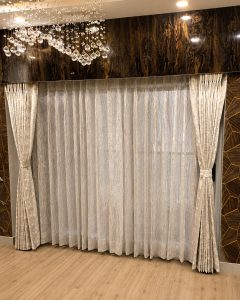
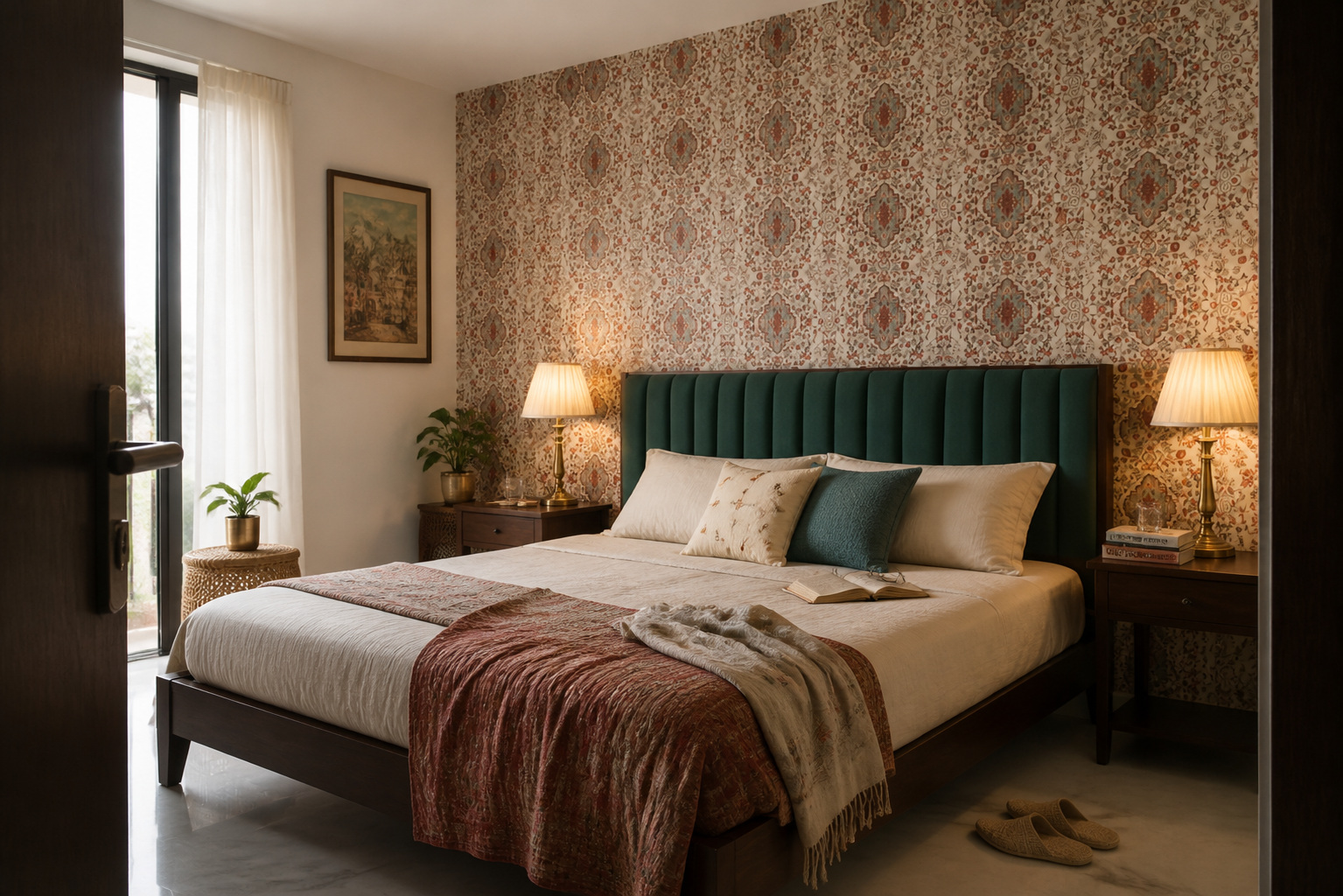
A customised mural is a piece of artwork, and artwork needs quiet around it. If the wall is doing something, the curtains go plain, the upholstery goes plain, and the cushions stop competing. Plain in this context does not mean dull — a heavy textured cotton or linen in a colour drawn out of the mural will do more for it than any second pattern.
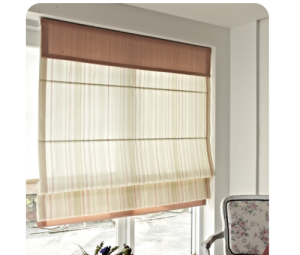
The reverse holds too. If you already have a strong pattern working somewhere in the room — a bold blind, a rug, a carved settee — the mural is the third pattern, and three is where a room starts to feel restless. This is the same discipline that governs everything else in a coordinated furnishing scheme, and it applies with more force here because a mural cannot be moved.
Whose image is it?
Worth a plain word on this, because it is asked less often than it should be. A photograph or illustration you found online belongs to whoever made it. For a home, most people take the view that a family photograph or an open-licence image is fine and a professional photographer’s work should be licensed. For a shop, restaurant, clinic or office it is not a grey area at all — printing somebody’s picture eight feet wide in a commercial space is a commercial use, and the licence matters. Design libraries exist precisely so this question does not arise, and they are usually the simpler route.
See a printed sample before the full run
Colour on a backlit screen and colour on a printed matte surface are not the same thing, and the difference is largest exactly where it hurts — deep blues, warm skin tones, dark greens. Ask to see the artwork proofed at final scale, and where possible ask for a printed sample of a section rather than approving from a monitor.
Finish matters here too. A gloss or heavily coated surface shows every undulation in an old lime-plaster wall once the afternoon light comes in sideways; matte forgives a great deal. On an uneven wall, matte and proper preparation will do more for the result than a better image. Whether the wall is even fit for wallpaper at all is a separate question, and an important one in this climate — we have written about which Kolkata walls can take wallpaper and which will ruin it, and it is worth reading first if there is any history of damp.
Frequently Asked Questions
Can I get wallpaper printed from my own photograph in Kolkata?
Yes. Customised wallpaper is printed from an image you supply and sized to your wall. The constraint is not whether it can be done but whether your particular file is large enough to be enlarged that far without going soft. Bring or send the original file and we will tell you honestly what size it will hold up at.
What resolution does an image need for a full wall?
As a working rule, divide the pixel width by 100 and that is roughly the widest sensible print in inches. A 1,080-pixel screenshot gives about ten inches; a 4,000-pixel camera file gives about forty. For a wall you generally want the original camera file or vector artwork. An image that looks sharp on a phone proves nothing, because the phone is showing it four inches wide.
Why did my customised wallpaper come out blurry?
Almost always because the source file was too small, or because it travelled through a chat app that re-compressed it on the way. WhatsApp shrinks anything sent as a photo; send it as a document instead. Blur that is in the file cannot be removed after printing, which is why the file gets checked before the order rather than after.
Is 3D wallpaper really three-dimensional?
Usually not. Most 3D wallpaper is a flat printed illusion of depth, drawn to be seen from one position. Some products are genuinely embossed with relief you can feel. Both are sold under the same phrase, so it is worth asking which one you are being quoted for — they behave completely differently in a room.
Will a mural work on the wall behind my sofa?
It can, but design it knowing that the lower three feet will be hidden and that you will rarely see it from far enough away for a deep perspective effect to work. In a compact flat, a large-scale botanical, a texture or an abstract usually looks better on that wall than a dramatic vanishing point.
Can customised wallpaper be fitted around switchboards, an AC unit or a grille?
Yes, and this is exactly why the wall is measured and photographed before printing. Obstructions are planned into the artwork so that nothing important is cut through. Working from an approximate size over the phone is how a switchboard ends up in the middle of somebody’s face.
Is customised wallpaper washable?
It depends on the surface it is printed on. We stock washable, PVC and eco-friendly options, and the right choice depends as much on the wall as on the room — a vinyl face is easier to wipe but far less breathable, which matters on any wall with a history of moisture. Tell us where it is going and we will point you at the right base.
How much does customised wallpaper cost in Kolkata?
It is priced by the area of the wall and by the base material you print on, so there is no single rate that means anything until the wall has been measured. What we can say is that quantity is genuinely predictable on a customised job — you are printing one wall, not chasing a repeat — which is one of its quiet advantages over a patterned roll. Send us the wall dimensions and the image and you will get a real number rather than a per-square-foot headline.
Come and see it printed, not on a screen
Bring the photograph, or bring nothing at all and look through the design library. Compare 3D, floral, textured and customised options at the size they will actually be seen, and talk it through with our soft interior designer and interior colour consultant — the design consultation is free, as is the in-home wall measurement that follows it.
Avikar Furniture & Furnishings
46 Central Avenue, Bowbazar, Kolkata 700012
Phone and WhatsApp: 8080095551
Monday to Saturday, 10:30 AM to 7:00 PM. Sunday closed. Parking available on request.
Serving Kolkata since 1971, with 6,500+ happy customers and a 4.7 rating on Google. You can also book a consultation online, or send your wall photographs and measurements on WhatsApp and we will come back to you.